
What Pop-Ups Teach Us About Permanent Brands
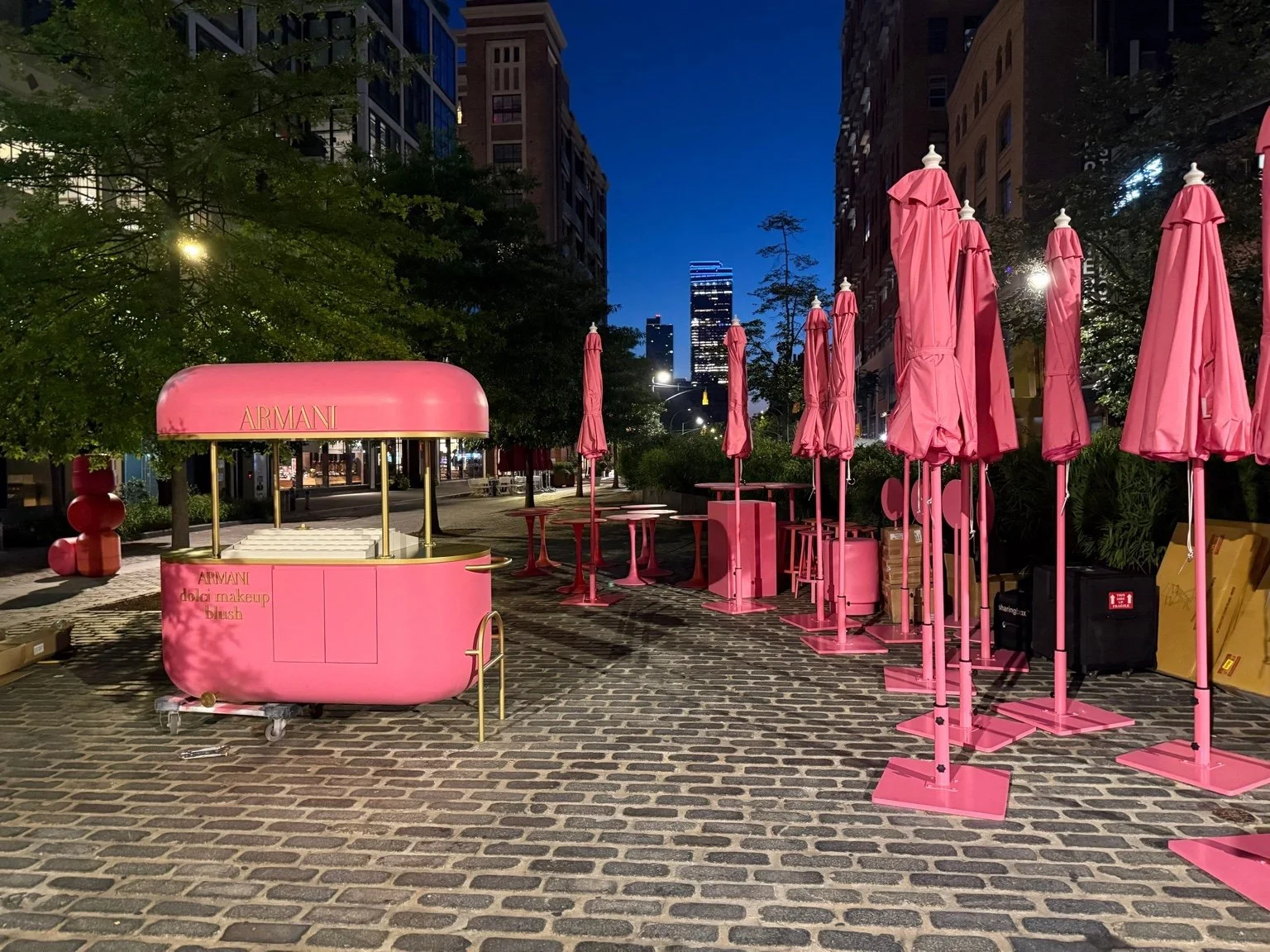
The completed blush kiosk at blue hour
Pop-ups aren't temporary anymore.
The structures disappear. The marketing doesn't.
Some of the world's strongest brands are investing extraordinary amounts of time, money, and coordination into experiences that may only exist for a weekend. At first, that feels irrational. Why spend months designing, fabricating, shipping, installing, and dismantling something so fleeting?
The structure was never the product. The memory is.
I spent a night observing an overnight luxury retail installation in Manhattan's Meatpacking District, and somewhere between midnight and sunrise I realized the most interesting part wasn't the installation itself. It was watching how many disciplines had to overlap to make a few effortless minutes possible.
The first decision of the night wasn't about finishes or lighting. It was where to park the truck.
In Manhattan, curb space is part of the construction schedule. Where the truck lands determines how materials move. That changes the installation sequence, which changes the pace of the build, which changes everyone else's night. It's a reminder that design and execution are never separate conversations.
Every decision creates three more. Good projects need someone who can see how they're connected.
That idea kept resurfacing.
Halfway through the installation, a small detail surfaced that could have easily become a much bigger problem. A cylindrical photo booth had been fabricated without an opening for guests to collect their printed photographs. Out came the drawings. For a few minutes, everyone did what every construction team does—worked backwards through the details to understand where it had slipped through.
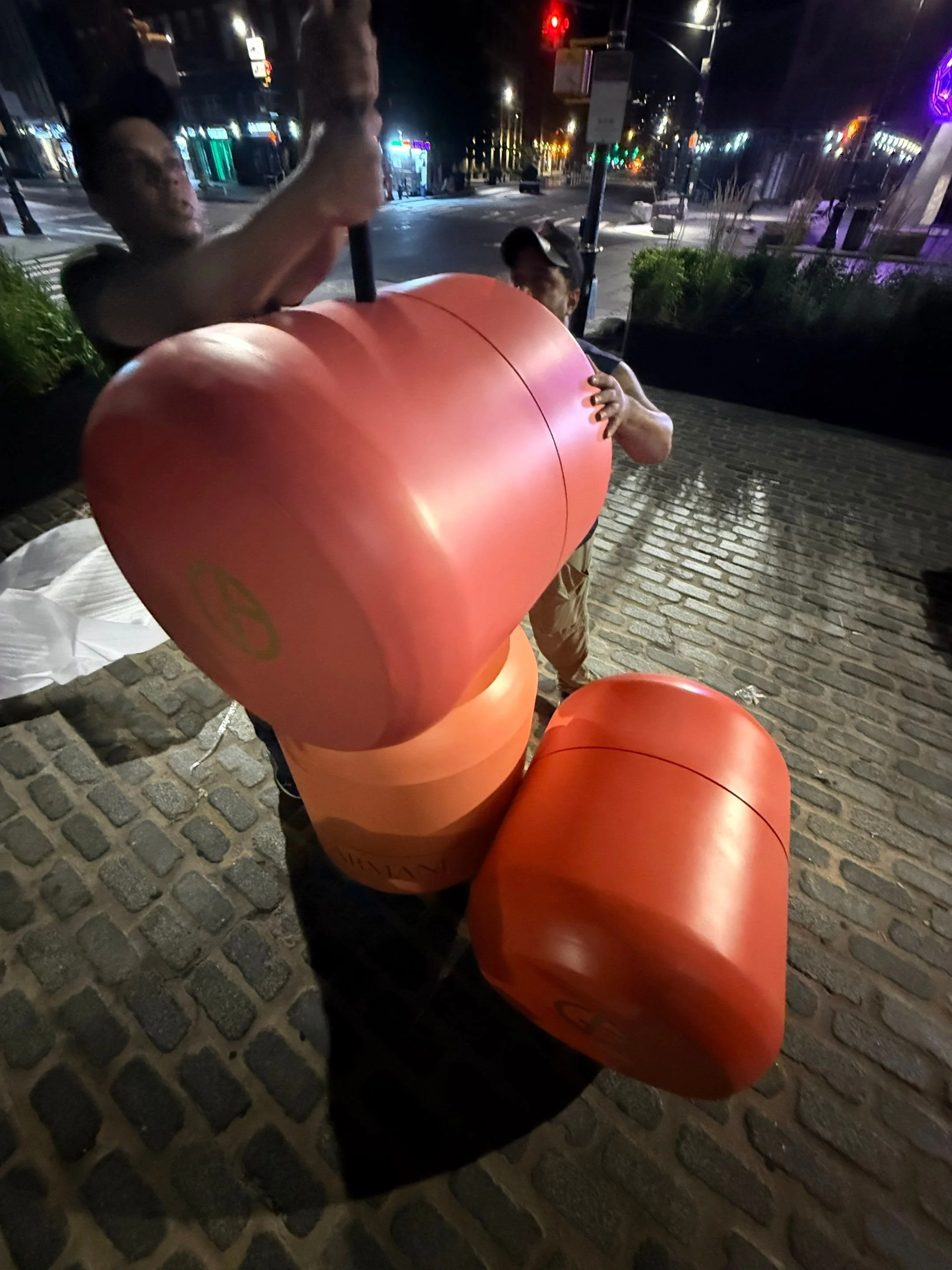
That part didn't surprise me. What happened next did.
Nobody stayed interested in who had missed it. The conversation shifted almost instinctively toward building the best solution. Project managers, fabricators, installers and machinists gathered around the same drawing. Titles disappeared. The person making the cuts had as much value in that conversation as the person reviewing the plans because everyone was protecting a different part of the project.
The original location for the printer wasn't going to work.
So the idea changed.
Instead of dispensing the photograph behind the booth, it would emerge directly beneath the camera. It wasn't the original design, but it was arguably a better experience. Guests would step out and find their photograph waiting exactly where they had just been standing.
Design rarely improves because everything goes according to plan. More often, it improves because people communicate well enough to rethink the plan together. That may have been my biggest takeaway from the night.
We often celebrate designers, architects, or brands as though great work belongs to a single discipline. Standing there, it became obvious that memorable projects are built in the overlap. Designers protect intent. Fabricators protect what's possible. Installers protect reality. Project managers protect communication. None of them are doing the same job, yet every one of them is shaping the final experience.
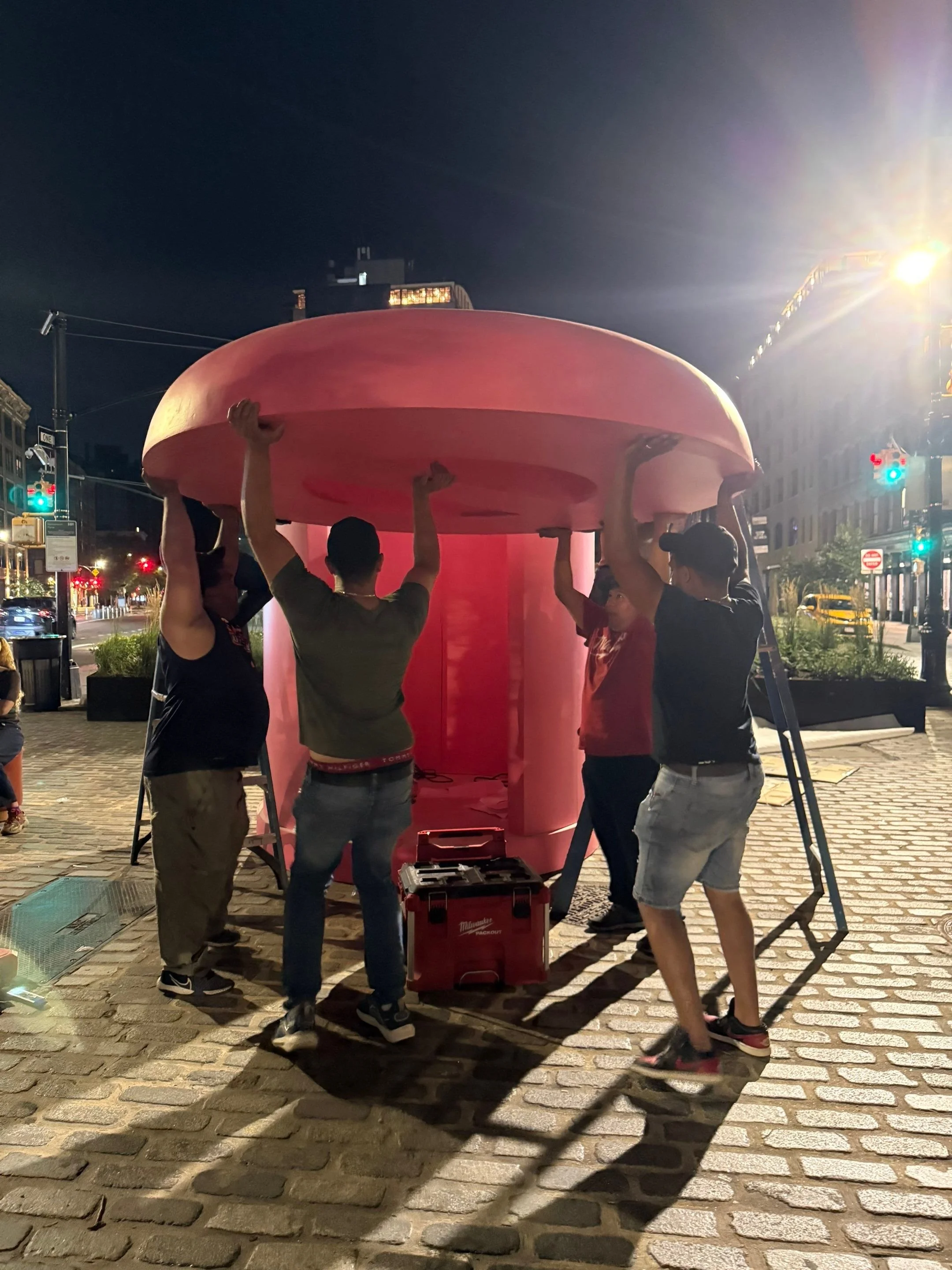
Four guys lifting the roof of photo kiosk.
The best project managers aren't simply coordinating schedules. They're connecting people who don't naturally speak the same language. Drawings become conversations. Constraints become ideas. Every discipline makes the next one stronger.
Somewhere around four in the morning, someone slipped away to grab coffee for the crew. Someone else quietly wiped fingerprints from a finished panel. A compliment travelled across the room after a difficult adjustment finally clicked into place. Those moments won't appear in the launch photography, but they're just as much a part of the finished project as the millwork or the graphics. Good crews don't just build beautiful work. They build momentum. You can feel the difference.
By sunrise, the city had started reclaiming the streets. Delivery drivers gave way to runners. Restaurant staff unlocked their doors. Curious pedestrians slowed down just enough to wonder what had appeared overnight. Under the morning light, colours that had looked muted beneath work lamps suddenly came alive.
Within a few hours, people would step inside, take photographs, share them online, and move on with their day. Most would never think about the months of planning, the revisions, the shop drawings, the logistics, the conversations, or the dozens of people whose work overlapped to create those few effortless minutes.
And they shouldn't have to.
The best experiences rarely draw attention to how difficult they were to create.
They simply feel inevitable.
Maybe that's what today's strongest brands understand.
A pop-up may only exist for a few days, but the impression it leaves can shape how people think about a brand for years.
Brands aren't remembered because they last. They're remembered because, for a moment, everything came together.
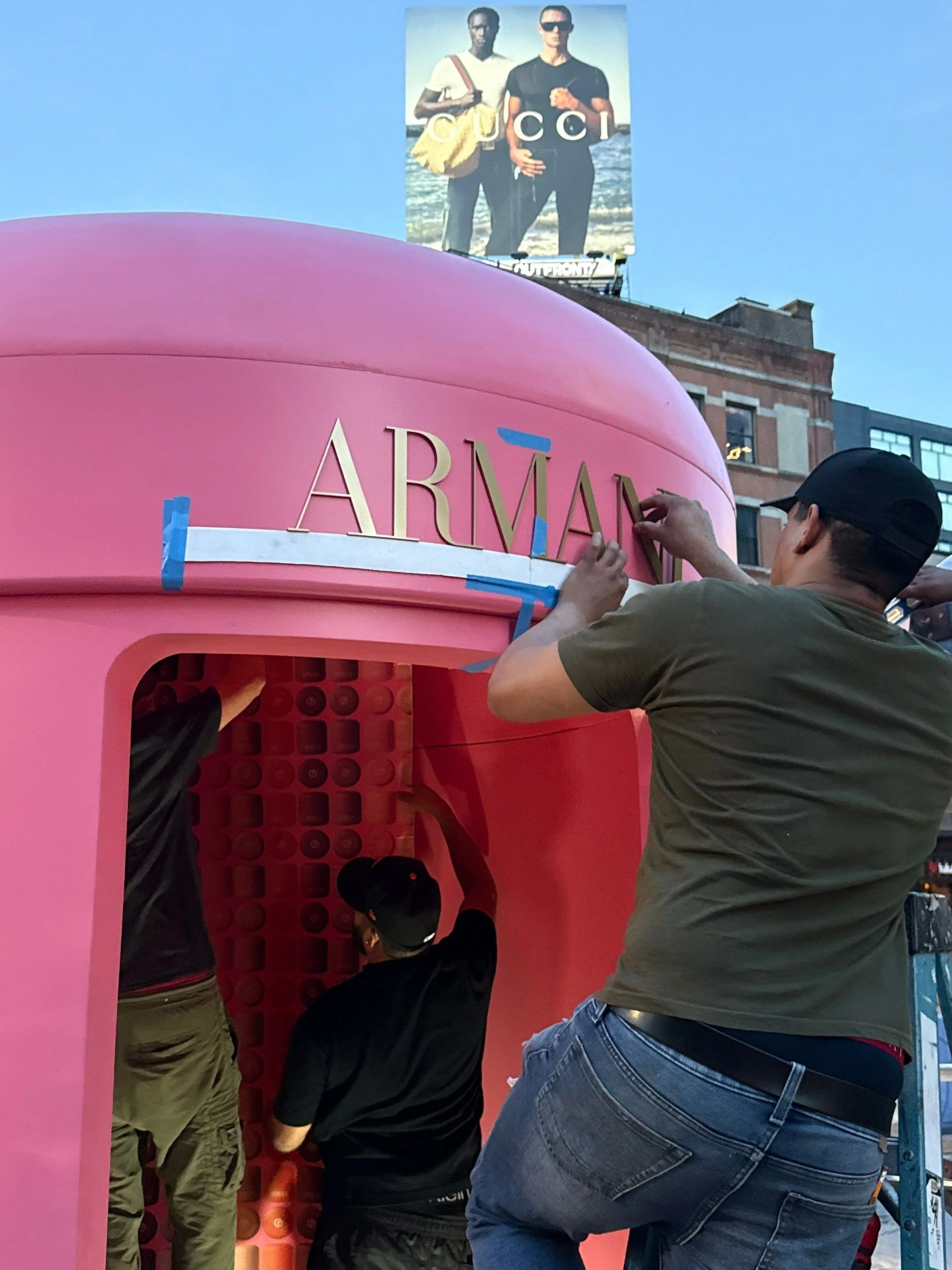
Installing the ARMANI letters.